Home  |   Links  |   Site Map  |      
   Our Mission  |  Dialogue News  |  Speeches  |  Board Members  |  Photo Gallery  |  Partners for Dialogue  |
 
 
 | Activities   >  Conference on Religion, Democracy and Extremism Oslo, May 15-16 2007  
Conference on Religion, Democracy and Extremism 
Oslo, May 15-16 2007

Conference on Religion, Democracy and Extremism

 
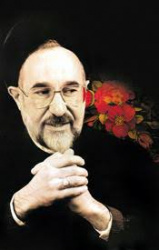
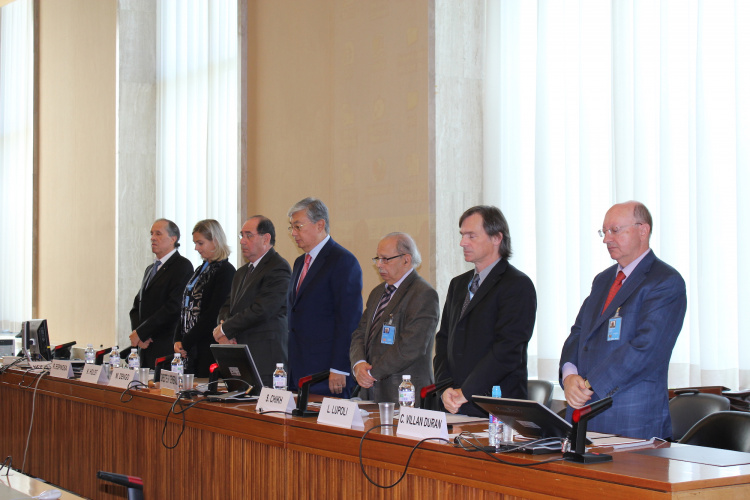
The Conference was convened by The Foundation for Dialogue among Civilizations (FDC) and The Oslo Center for Peace and Human Rights (OC) in collaboration with the Club de Madrid (CdM). The Conference was co-chaired by former President of Iran and President of FDC Mohammad Khatami, former Prime Minister of Norway and President of OC Kjell Magne Bondevik and former President of Chile and President of CdM Ricardo Lagos.
 
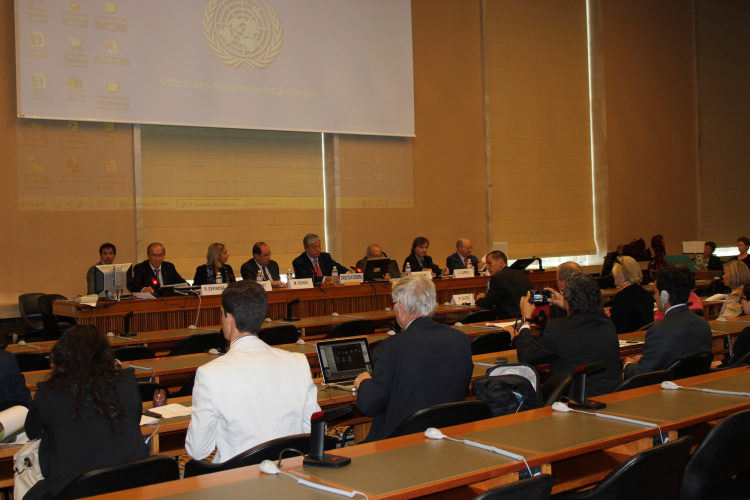
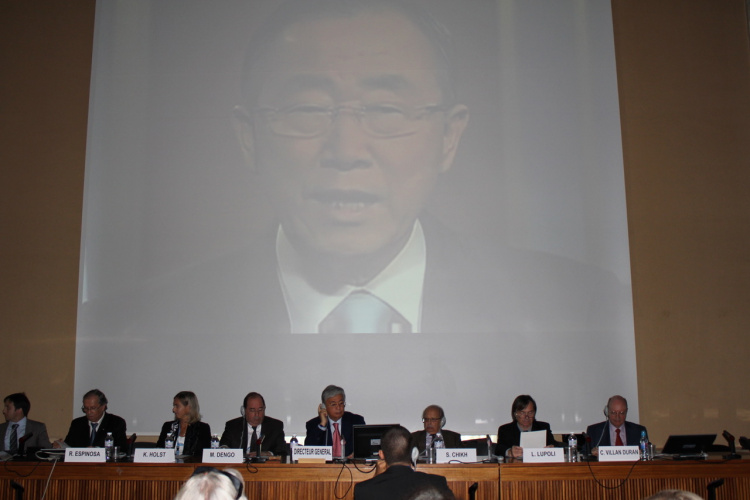
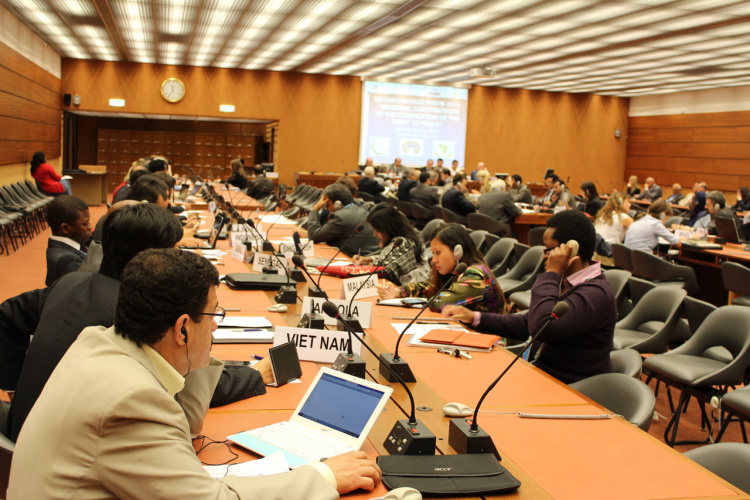
A diverse group of forty religious and political leaders, scholars and government officials, from a range of Muslim and Western countries met in Oslo, 15-16 May 2007, in a dialogue aimed at generating mutual respect and understanding. The group met under the theme “Religion, Democracy and Extremism”, with a view to build bridges and transcend hostile images, stereotypes and generalisations of one another in the wake of recent political and military actions that have fed into the polarisation between “the Islamic world” and “the West”. The participants came to Oslo with the mutual recognition that the polarisation only plays into the hand of hard-line elements on both sides of this unnecessary divide, elements which use the rifts as means of justification for violence and use of force.
 
While there are several ongoing international initiatives with a view to reducing conflict based on differences and providing platforms for peaceful dialogue, the participants underlined the need to build further momentum in this regard.
 
Among other issues, the participants discussed the following:  
  • There is a need to develop further dialogue within and among religions, as a means of proactively and positively managing and fostering diversity.  
  • Dialogue is not negotiation nor is it evangelizing or preaching. Dialogue is opening the window of one’s heart to other human beings and to create and share empathy for their circumstances and suffering.  
  • A main cause of suffering and violence is the existence of a variety of identities that hold rigid views, while seeking to prove themselves by way of negating others. Such rigidity makes the holder of that identity suffer from self-importance and egotism.  
  • There is no culture, religion or civilization that can dictate to others certain values. Religion should not be allowed to be abused for political, economic or other power purposes.  
  • Public opinion should be retaken from the extremists. Religion is inherently not an element to encourage violence, but rather to create the finest munificence and promote the most ethical relations among people, and can be a part of the solution.  
  • We underline the importance of education and training that promote tolerance and understanding, mutual respect and acceptance, for all, including the media and public opinion leaders.  
  • Tolerance means to respect diversity and differences of opinion. Those who have strong convictions themselves, including religious ones, should be the first to understand others who have theirs.  
  • The common ground between religions, such as Christianity and Islam, should be built upon to enhance freedom, equality, human dignity, tolerance and peace, including for the benefit of religious minorities.  
  • Universal human rights should be respected by all civilizations and states. There will be no conflict in the relationship between state and religion if the state is genuinely democratic and religion is committed to universal human rights and a pluralistic society.
 
In line with these principles, the participants highlighted the following specific objectives:
 
·        To promote intercultural dialogue and respect for diversity and human rights;
·        To reduce hostile images by creating trust;
·        To enhance understanding in the West of the nature of Islam, and in the Islamic world of the West, and thereby reduce the scope for misunderstandings and misrepresentations;
·        To raise awareness in the West of humiliating practices towards the Islamic world, and in the Islamic world of incitements against the West;
·        To devise more productive and constructive ways of dealing with extremism and terrorism;
·        To deny letting extremists define the relationship between the West and the Islamic world;
·        To focus on disparity of resources between the rich and the poor;
·        To ensure equal participation by women;
·        To encourage and equip youth to participate and exercise leadership in political processes and institutions.
·        To implement the objective recommended in the UN Millennium Summit in 2005 regarding dialogue among civilizations and culture of peace.
 
To these ends, the participants committed to work together, including in preparation for a follow-up conference in Iran in 2008. The three co-organizers accepted a call from participants to:
 
1) Work actively for increased public understanding, awareness and mutual respect of each other and our respective civilizations, including by creating greater media attention to voices of reason;
 
2) Study further and apply lessons learned from inter-religious conflict and dialogue, as brought forward in the Conference, in order to inform the further work;
 
3) Include in dialogue activities those who may not have access to or predisposition toward processes of peaceful dialogue;
 
4) Communicate and collaborate with other initiatives which share similar objectives.
 
 
| Activities
  • Global Agenda for Dialogue among Civilizations
  • Year of Dialogue among Civilisatins
  •  ...More 
     
    Links  | Sitemap  |   Contact us  |   DESIGN BY ACA Company - 2007